Total Pageviews

Thursday, April 04, 2019

Glopowrimo April 2019 (the journey so far)
I. Early bird prompt: "And now for our early-bird prompt (optional, like all our prompts!) Today, we’d like to challenge you to write a poetic self-portrait. And specifically, we’d like you to write a poem in which you portray yourself in the guise of a historical or mythical figure. "
Self-portrait as .....
I am hanging between earth and sky
Breathing difficulty
Those who love me are far below
And somewhere up above is the Sky
When I cough it becomes thunder
The Sky answers with lightning
These are the words of my roaring
No one else answers
The drops of my sweat and blood
mingle
with the dust of the earth and the heat
Each drop has a cascading effect
From my eyes as they fall they seem to splinter
into the faces of millions
of drops
and shine
in the pitiless sun
tomorrow to be reborn
as a million different people
infused with my life and breath
Dead, buried, resurrected, ascended or not
The truth will be I will live on
in a million different others
Not in the ones who did not
but in the ones who will
My hunger for love
as vast as this Sky
in the echoes of always
eternity and infinity
being, from now on, fulfilled.


II. April 1
"For our first (optional) prompt, let’s take our cue from O’Neil’s poem, and write poems that provide the reader with instructions on how to do something. It can be a sort of recipe, like O’Neil’s poem. Or you could try to play on the notorious unreliability of instructional manuals (if you’ve ever tried to put IKEA furniture together, you know what I mean). You could even write a dis-instruction poem, that tells the reader how not to do something."
Instruction manual for poets
1.Better to be known by everyone
than to know everyone
so you can concentrate
concatenate your magic brew or potion
made of frogs, wood shavings and puppy dogs' tails
or lipstick, gloss and mascara's aid
2.Write to be the best
but don't rest
When you send things out and get rejected
remember it was only a misfit
and when you get accepted
don't take the credit lest you become lazy but
ascribe it to the same stars you were aiming for or at
3.The secret is to write
in such a way that
you write your heart out
so everyone reads you
but no one lets on
as they are jealous
as they get accepted
but they see burning in your poems
a fire
Icarus-like
in flight, without wings
soaring sunwards, higher than the heights
and just like Narayanathu branthan
roll your poems up Poetry Hill
then let let let let let them roll down
to the ground
and laugh
uproariously
whether they float or flail
on the ground
& whether they win, or they fall and fail.


III. April 2
Today’s prompt (optional, as always) is based on this poem by Claire Wahmanholm, which transforms the natural world into an unsettled dream-place. One way it does this is by asking questions – literally. The poem not only contains questions, but ends on a question. Today, I’d like to challenge you to write a poem that similarly resists closure by ending on a question, inviting the reader to continue the process of reading (and, in some ways, writing) the poem even after the poem ends.
The wall melts suddenly
Then I find it's under me
The devil is after me
Money takes wing and flies away
My health is a pool at my feet that I try
To make freeze into a piece of ice and put back inside
My body. Someone has my throat knifed.
I lie on my bed, stiff as a board
If I move I will be engraved
Too young for that, I do not stir
No dreams interrupt my ragged fight for breath
I'll get up and go for a syringe
A change of medicine will be, right now, just like a refreshing change of scene
It's death I am fighting, but I am not afraid
We fought many times before and each time we failed
To bring it to any definite conclusion
It can still go this way or that like the walk of a drunken inebriate
As for God, God is silent as usual
I put a coin in the slot of the jukebox
And hear relaxing music, deep-sleep refreshing music
Sounds of Nature, something something Hertz (582?), but I forget just how much it was
For six hours or eight hours
Or non-stop Christian hymns
Or worship music that gentles
Or old Malayalam film songs
Or what my Dad used to play
Country-classic gospel songs starting with Jim Reeves
All listened to for healing thatcdoes not come when I am in my sleep
I put a coin into the cup of God as if I am begging him to bless me
I put a coin into the cup of the watchman, the one who stands at the gate, and the doorkeeper
Then I run out of coins so it cannot become thirty
Three is the number of the ones in 'Tolstory'
I once loved a woman who probably loved me
Now she always and only lies to me
Whenever I tried to make the coin clink back in those days then it worked
But my fever I could not pass on when she twerked
Soon she was a tree and someone an axe
Who brought between her and me a tax
Of separation, a divide of contortion
A contraption of four legs that had no name but crawled
It crept into my blood like black ink in a cauldron
And as for all the others, they were axed into perdition
By me who could not stand for an instant any key
That could set me up or put me down to be
To end a long story or cut it short is to let it grow a tail
Am I sheep, pig, horse or donkey? I am unable to make avail
Of butterflies, sisters and three or four women in jail
I don't say it but I am pretty sure God is punishing me for my sins
I wish to stand up but when I sit down I'm on the windowsill
I look down, and the distance is too short to jump and kill
Myself. And there are no faces down there wanting me not to for me to get a thrill
And feel wanted. Just empty street. No kissing or whispering lovers, or songbirds trilling even, still.
My head was spinning and I was falling before reaching the end of the till
They may call it attempted suicide but as for me it was just a home-run of the ill.
A commonplace thing, when the pupa or coccoon
breaks, becomes a wet butterfly. But does it take to crooked wing?
(My poem hopefully does the opposite of the prompt)
IV. April 3
And now for today’s prompt (optional as always). Today’s prompt is based in a poem by Larry Levis called “The Two Trees.” It is a poem that seems to meander, full of little digressions, odd bits of information, but fundamentally, it is a poem that takes time. It takes its time getting where it’s going, and the action of the poem itself takes place over months. Today, I’d like to challenge you to similarly write something that involves a story or action that unfolds over an appreciable length of time. Perhaps, as you do, you can focus on imagery, or sound, or emotional content (or all three!)
Glopowrimo #3
Trivandrum: The 70s
You meet them, the mynahs, on the streets.
'One for sorrow
two for joy
three for a letter
four for a' ...
There you get stuck
so you listen, instead
to their whirring wings
(fluttering: small, chattering windmills)
their "key key key keeeeeeys" -
your home-brown smalls, their slender lives
see their black-and-white sprinkled, dark-brown coats
a variant of the crow-pheasant's browns
those yellow-ringed eyes, their dainty masks
Jeddah: 2009?
You see them again
They are not the same 'thems'
You, not the same you
Even the century, become new
The coconut trees replaced by palms
But the heart -
That longs only for some 'loving kindnesses'
and a few 'tender mercies',
'better than life' -
feels time fall away
and the dust of the past, of a space you love
settle again
on your parched lips
awhile.
V. April 4 "And now for today’s (optional) prompt, inspired by Teicher’s poem “Son“. One thing you might notice about this poem is that it is sad, but that it doesn’t generate that feeling through particularly emotional words. The words are very simple. Another thing you might notice is that it’s a sonnet – not in strict iambic pentameter, but fourteen rhymed, relatively short lines.
Today, we’d like to challenge you to write your own sad poem, but one that, like Teicher’s, achieves sadness through simplicity. Playing with the sonnet form may help you – its very compactness can compel you to be straightforward, using plain, small words.
Happy (or sad, we guess) writing!"
Glopowrimo #4 - A Roseate Sonnet
Self imposed exile for God knows what or why or what it means to Not Be There/Around
Life and Love are the great betrayers
Judas and Brutus, their embodiments
But even ordinary men, my mate
Can be or feel betrayed by indifferent Fate
As a child, his mother taught him to cycle
Along with his father. till he was happy not to topple
Off its saddle, but when he became a parent of three 'tenders'
He could not be there to run behind his kids' wobbling fenders
The women he loved and he were always parted
The things he wished he'd learned remained dear, but departed
Rose, sadness wears your brightest red hues
Oft, as the colour of a ghastly wound
Seen from the inside, pulsating, raw
Ever not healing, red as an infected craw
©®Koshy AV

Tuesday, January 01, 2019

Setu ....................... सेतु: The Increasing Relevance of Rabindranath Tagore f...

Setu ....................... सेतु: The Increasing Relevance of Rabindranath Tagore f...: by Dr Bina Biswas and Dr Koshy AV Abstract: The paper studies Tagore’s contribution in his seminal leanings to Modernism, post colonial...

Thursday, November 29, 2018

Wednesday, June 27, 2018

Wake Up, India: Essays for Our Times – Dalits in the Spotlight during 2014- 18 BJP Rule

https://countercurrents.org/2018/06/27/wake-up-india-essays-for-our-times-dalits-in-the-spotlight-during-2014-18-bjp-rule/

Saturday, April 07, 2018

Best Researcher Academician Jazan University English Department 2018

Dear friends , 
Happy to inform you that Jazan University has given me the BEST RESEARCHER/ACADEMICIAN AWARD of 2018 of the English Department presented to me by the Dean, and Vice Deans of Faculty of Arts and Humanities, Abu Arish College, Jazan, Saudi Arabia. First time ever, so I also enter (their) history. Reward for seven years of non stop hard work.
Also that the President of the University received from me gifts of my/our books Scream and Other Urbane Legends by Dr Koshy AV and LiFi PublicationsSilhouette I & II And Other Short Stories featuring Eternal Linksand Allusions to Simplicity by Authorspress: Publishers of Scholarly Books. Could not give the other books not having them.


Wednesday, April 04, 2018

Resurrection Day

Copyright Koshy AV
After the battles
after the wars
after the arrest, 'the torchlight red on sweaty faces'
after the betrayals, the denials, the trial
after the scourging, the spit and the mocking
after the falling, the weight, and the hoisting
after the desertions, and death, e'erything marred
despite the nails and the crown of thorns
despite the spear in the side and the wounds bleeding
despite the dark grave after the dying
After the thinning of the hair
After becoming more and more bald
After the black becoming the grey
After the paunch and the becoming ugly
After being one step closer each minute
To the fall of the final curtain for all
Despite everything
despite everyone
despite hunger, thirst, loneliness, grief, suffering and gall
despite the hurt, the pain, the sweat and the tears
despite it all
I find myself, still standing tall
far from the strife, the din and the fray
Despite fighting face to face
with the evil one who wanted to destroy me
I still have come to Resurrection Day
My feet have not stumbled, I did not fall
It was the stone that was rolled away
I am the Truth, the Life and the Way
The light of the world
Let no one now say
'Beyond here lies nothing'
It is a 'new morning'
"Fear not." Over such ones death no more has sway.

Wednesday, December 21, 2016

YES

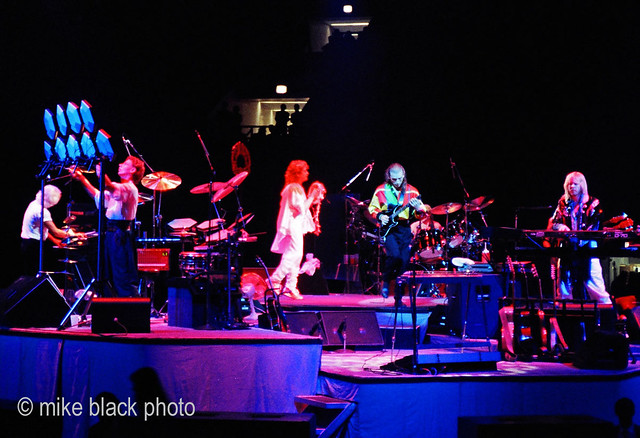
The music of YES has accompanied me from childhood. Heart of The Sunrise carried me away into melody. Jon Andersen's girlish voice suited them perfectly and I had never heard a drummer as different as Bill Bruford. Wakeman stole the show with his Moog synthesizer in Close to the Edge and Steve Howe was also a class apart as an acoustic and lead guitarist, unique. As for Chris Squire, late, he was the only one who played bass like it was like lead. For me Yes started and ended with them, except for Trevor Rabin bringing in a  breezy, welcome, fresh, change of pop air in once. I agree with the Hitler meme video that Yes was them and like how LOTR music should be and produced nothing much of significance after Going for the One but for their classic YES period of five albums meaning Fragile, Close to the Edge, Relayer, Tales from Topographical Oceans and Going for the One they are up there with Genesis, King Crimson, Moody Blues, Jethro Tull, Pink Floyd and secondarily Marillion.  And 90125 makes for a good change from their usual style, as an album.

A White should also be mentioned, of course, as the drummer, but for me he never matched Bruford.

Happy they have been finally inducted into the Rock and Roll Hall of Fame, at least in 2017.

Yes has had many other members over the years but only Tony Kaye matters to me of them and Peter Banks for nostalgia and sentimentality's sake, as well as Patrick Moraz. Igor Khoroshev needs passing mention.

Something needs to be said about Buggles' Trevor Horn as singer and Geoff Downes on keyboards as well as  DRAMA which is a fine album after the lacklustre TORMATO.

Heart of the Sunrise (FROM FRAGILE)


Finally, there is no Yes without the art of Roger Dean.

The pic is that of Union Yes which has all the members inducted into the HALL OF FAME


The image has Andersen, Wakeman, Bruford and Howe.


AND YOU AND I (FROM CLOSE TO THE EDGE)

For more information on YES line-ups and albums the best page is this one: http://yesworld.com/we-are-yes/


Tuesday, December 20, 2016

Metapfiction

Some other place, somewhere, some other time - a tentative start to a novel that may be renamed later

It must have been so. There, then he might have been a man and treated her cruelly while here, now it is just the opposite. He is still a man but being treated cruelly by her, a woman. This makes it symmetrical, aesthetic, if nothing else and hence, in that way, a matter of satisfaction. This does not lead to any kind of satisfaction, however, such a thought. What matters is not to be treated with cruelty and not treating someone cruelly.  Of course, there are no other lives or planets or universes, it is here itself that they have both been one thing or the other to each other. The blame is equally distributed or apportioned as is the praise. It is only in such encounters that one finds out how much of the worst and the best one can have brought out in one and bring out in the other. Looking at it in that sense such encounters are truly significant as harbingers of self-knowledge, if not worth having or beneficial. Maybe they are that too. Maybe in the long run, they turn entirely poisonous or malignant or entirely benign, like cancer cells, if such a thing is possible.


Metafiction - This won't be there in the final draft probably.

The thing about writing a novel is this: where does one start? The form itself is puzzling in 2016 December. Is it about writing a lakh of words? Or is it about passion and intensity? Is it form and genre, structure, style, language, mood, ambience, atmosphere, plot, story, characters, characterization, settings, details, feelings and emotions, points of  view and all the other things he teaches like exposition, rising action, conflict, confrontation, complication, climax, falling action and resolution? Is it having a giant vocabulary and having an impeccable grasp of grammar and syntax as well as dialects and registers and a feel for the language as it is used now and was and will be later? Using lakh reveals one's nationality. "Where do I begin? To tell the story of how great a love can be?" "Let's start at the very beginning." But where does 'a great love story' begin?  One that is 'older than the sea'? And 'younger than the mountains'? Is he a plagiarist for using all these quotes? No. He puts them in double or single quotation marks and it does not matter in creative writing. Is this going to be just that or something more? Can he roll all three stories he wants to into it plus the story of the nation or nations he has been in to make it what he really wants to, an epic novel like the ones the Russians wrote. The novel had died after them. Tagore's Gora and Bankim Chandra Chatterjee's Anandmath and Lalithamabika Antharjanam with her novel that included Gandhi in it were all written in its heyday in a sense by their getting to know of the greats only later and so they had been still been able to write 'proper' novels. Every great novel after that was proof of its deconstruction, be it Ulysses or Death of Virgil or American extravaganzas like Gravity's Rainbow which he hated and could not finish or Beckett's classics or any other novel that still mattered after the Russians, especially after Anna Karenina. This dissolution of the well-made novel existed even in War and Peace and Doctor Zhivago. It could be seen even in Jude the Obscure and in the fact that Dickens could not finish his last Drood novel.

He is that rare phenomenon, a great writer stuck in the past in a world that no longer cares for such a gigantic misnomer or freak and he wants to write a novel, this one - part of a trilogy but starting with the last one first and not yet knowing how to go about it but feeling his way.

It makes for good reading, though, as it always did.

One could start with repetition. That is how one always starts. The first woman he loved was his mother. Then his sister. After Freud, no such statements are possible without admitting that it is all incest, too, of some kind or the other. Oedipus complex. What is the word for sister love complex? He does not know. There must be one. Sibling love, probably. Interesting. Must google it or look it up. Musil was the one who dealt with it in his classic incomplete novel. Diotima and Ulrich. The novel had killed him or he had died while writing it. Would this one kill him too?

GSA, it seems.

'Roll call of names. Names fly in the wind.' He has written of it in Anamika too and thus in a diary ages back and was now writing it here again. This would not do, one does not talk of love by listing out the names of every girl or woman he had ever had a crush on as if it was a poem or a shopping or laundry list. That does not lead to the novel - what would lead to it is planning, research, preparation, writing, perfect execution - the things he blamed Modi of not doing regarding demonetisation.

So where does one begin?

Humour?

Some other place, somewhere, some other time - a tentative start to a novel that may be renamed later

It must have been so. There, then he might have been a man and treated her cruelly while here, now it is just the opposite. He is still a man but being treated cruelly by her, a woman. This makes it symmetrical, aesthetic, if nothing else and hence, in that way, a matter of satisfaction. This does not lead to any kind of satisfaction, however, such a thought. What matters is not to be treated with cruelty and not treating someone cruelly.  Of course, there are no other lives or planets or universes, it is here itself that they have both been one thing or the other to each other. The blame is equally distributed or apportioned as is the praise. It is only in such encounters that one finds out how much of the worst and the best one can have brought out in one and bring out in the other. Looking at it in that sense such encounters are truly significant as harbingers of self-knowledge, if not worth having or beneficial. Maybe they are that too. Maybe in the long run, they turn entirely poisonous or malignant or entirely benign, like cancer cells, if such a thing is possible.

Monday, December 19, 2016

I gave you my everything, finally
Because I never will, again
When you finally get really, really hurt
it ceases to matter if it was meant or not
if to hurt was the intention from the other side
or it was only the ignorance of selfishness
There's just the shock of getting hurt
of knowing something this time got broken
and that it cannot be repaired
There's only the tears you never shed
There's only the blood you never bled, in this place
The lonely room and the empty space
When you really get hurt, hurt, hurt.

A couplet

I would of have been glad to stay
If only you had not driven me away

Goodbye.

It was a dead end
(but) even dead ends (reach their) end
It (too/finally) did

It was a one-way street
a one-way ticket
That is why since day before I gave it my all
after understanding just who you were and I looked like to all
It was my farewell gift
after understanding how well you are able to make me die
and fall
You did not hear the terrible thud
it made
when
I killed (y)our love
as it ended
the music
dying in my room
of my love for you
a sound softer than the sound of a dying fall
If you had you would have wept
as the one that died, it's true, lost
but nothing as much as to what you lost
compared
to what you would have got
in the many years still left to it
if you had not done this (at) all.

God and I + you and I

Only God
can create or make
something out of
nothing

Only God
can let people never die
make them drink of the fountain of everlasting youth
reverse or halt aging or disease
heal in a second and fully, miraculously
make people live forever
Only God
the philosopher's stone

overcomes death
brings back people from the dead
can be in two places at the same time
and travel into the past and the future, melt time


If I was God
having loved you
I would
unmake and remake you
as what I want you to be
from or out of thin air
give you youth and beauty
eternal
never let you die
bring you back from death if you did
let you always be with me
invisible to  others if and when needed 
and also in the past and the future
just in case there are other lives
or were
and to go one better than Him
would prove to this clone of yours
that by granting you or her
and not me
all this
it still would be 
as hopeless
as my love for the other, earlier you
again.

This is why I am not God
This is why it is clear
I am
only a lover
a failure
and that you are not anywhere in the picture
in the first scenario
or the second.

Saturday, October 22, 2016

Adverb poem - Brightly

Brightly the fire burns in the hearth, of the home 
where the children are sleeping quietly.
Brightly the moon shines in the night, above the loam
where the grass is soughing in the wind gently.
Brightly the cat’s eye glows yellow at night.
Before it winks shut, it turns green slowly.
Brightly  and  spread out are the city’s lights
that look like fireflies shimmering softly. 
Brightly the sun sends its blessings from its heights
to the land down below, and then blazes hotly.
Brightly the stars glint before sleep closes one's eyes
and dreams come to chase us in its meadows, playfully.

©  Koshy AV

Adverb poem - Brightly

Brightly the fire burns in the hearth of the home
Brightly the moon shines in the night above the loam
Brightly the cat’s eyes glow yellow at night
Brightly  and  spread out are the city’s lights
Brightly the sun sends its blessings from  its heights

Brightly the stars glint,  before sleep  closes one’s eyes

Copyright, Koshy AV

Thursday, August 04, 2016

SHAMAN


You take the half-grown python, with no teeth, from its receptacle
She waits, naked, to be imbued with power to procreate
You write runes on the parchment
Make her fertile
Bind sterility's curse
Initiate, bring new life to her womb


The symbol, most potent; the most ancient one, stirs
(You are fully at ease
Born to do this
Awake, alive!)
You hold the snake firmly, make its cloven tongue kiss
Her eyes, her eyelids closed
Then move it over her face
To her lips, circle it down to her breasts
To make it flick-lick her nipples
Circle both her areola
And her breasts
Down, further
Rhythmically
Past her soft, flat stomach and belly button
Making a bee-line...
She
Complies
Reclining, lying down, opening...
Certain
You know what you're doing

The living mortar pestles
The Milky Way
Entering, head first, entirely, its entirety
Through the dense underhung
Tangled black
Worming, being pushed in, squirming...

The engorged passage
Makes curds and whey
You, the medium of the Absolute
At-one with the Spirit
The snake, yours
She, a willing vessel
You, the snake and she - One
With the silent universe
Dark as your hand
Lit with the veins on its skin
The pattern on the snake
Stars blossom, black and white, burst and fall
In the deeps of inner space

Her breathing
Becomes peaceful
Still

Like yours

The snake
Curls up

Meat. Dead beat.
(c) KOSHY AV 8.5.2016

SHAMAN


You take the half-grown python, with no teeth, out from its receptacle
She waits, naked, to be imbued with power to procreate
You write the magic runes on the parchment
That will make her fertile
Bind the curse of sterility
Initiate her & bring about new life in her womb
The symbol, most potent, the most ancient and powerful one, awaits
(You are fully at ease
Born to do this
Awake, alive - You!)
You hold the snake firmly and make its cloven tongue kiss
Her eyes, her eyelids closed
Then move it down over her face
To her lips, then circle it down to her breasts
To make it flick-lick her nipples
Circle both her areola
And her breasts
Move down, further
Rhythmically
Past her soft, flat stomach and belly button
As she
Complies
Lying down, reclining, opening up
Certain
You know what you are doing

The living mortar pestles
The Milky Way
Entering, head first, entirely in, in entirety
Through the dense underhung
Tangled black
Worming its way
The engorged passage
Makes whey
You become the medium of the Absolute
Totally at-one with the Spirit
The snake, yours
She, the willing vessel
You, the snake and she become One
In the ritual
With the silent universe
Dark as your hand
Lit with the veins on its skin
The pattern on the snake's skin
Stars blossom, burst and fall in the deeps of the inner space of the cosmos

Her breathing
Becomes peaceful and still

So does yours

The snake is returned
(c) KOSHY AV 8.5.2016

Shaman


You take the half grown python, with no teeth, out from its receptacle
She waits, naked, to be imbued with the power to reproduce and procreate
You have written the magic runes on the parchment
That will help to make her fertile
Bind the curse of sterility
Initiate her and bring about new life in her womb
The symbol, the most potent, the most ancient and powerful one, awaits
you
(You are fully at ease
Born to do this
Awake, alive - You!)
Ready to be used
The ritual starts
You hold the snake firmly and make its cloven tongue kiss
Her eyes, her eyelids closed
Then move down over her face
To her lips, then circle down to her breasts
To make it flicker over her nipples
Circle both her areola
And her breasts
Move down further
Rhythmically
Past her soft, flat stomach and belly button
As she
Complies
Lying down, reclining fully, opening up wholly
In the certainty
That you know and are sure of what you are doing
In control, and will not harm her
The living mortar pestles
The Milky Way
Entering entirely
Through the dense growth in the jungle
The black forest of the night
The engorged passage of Life
Makes whey
You have become the medium of the Absolute
Totally at-one with The Spirit's force
The snake is yours
She, the willing vessel
You, the snake and she become One
In the sacred ritual
With the silent universe
Black as your hand
Lit with the veins on its skin
The patterns on the skin of the snake
Stars blossom, burst and fall in the deeps of the inner space of the cosmos
And her breathing
Becomes peaceful and still

So does yours
(c) KOSHY AV 8.5.2016

Sunday, July 10, 2016

Anniversary

https://harivarasanam.wordpress.com/2015/09/01/the-contributors-having-their-say-the-significant-anthology/

Sunday, July 03, 2016

Too many love poems

"There are too many love poems in the world."
"Yes."
"It gets boring after some time. Or maybe there aren't enough."
"I don't write love poems. Mine are more like love poems that are hate poems.They have a bite."
"Yes."
"Like we can't write without being inspired by women and we can't write unless we are free from them?"
"Yes"

A "story" someone told me today.

He is this young chap I know from on Facebook. We talk off and on, for some strange reason. Dylan is a connect and so is Cohen and I surprise him at times by writing something he considers way out, on par with Kerouac and others. He writes rhyming poems that all read like Dylan during his best years, to a large extent. But they are good in themselves and very readable. He also writes good fiction. He has a dad and he does weed. He is a college dropout. He periodically posts saying he is in some asylum or the other. We always have extremely sane conversations, though. He has a grandmother. I told him of my son today and he told me that his dad said he was autistic, but we are both not I told him. He agrees.
I said that we always have sane conversations but today it turned bizarre. He said he had jumped off a bridge once and it was because of Dylan. When I asked him which song and which line of Dylan's made him do it he said, no, I met him.
He told me he had once been admitted in some place in Warwickshire for doing weed and was on rehab mode but it was there he had met D. His name also begins with D. Anyway he told Bob that he wrote fine songs and asked him where he could get some acid. He says the trip turned sour on him then,  there and he was "Sectioned." It ended with the bridge thing, I guess. He says he knows "what really happened". Despite it being 'written of in the papers and things as something else.'
I asked him if I could steal his story
What for, he asked.
To write as a story or poem, I said.
Sure if you don't use my name, he said.
I haven't.
Wish he hadn't danced with Mr D.
No song finer than Idiot Wind which he, his dad and I all like. The fist line in it seems to have got into his jugular.
Fifty years on, since Blonde on Blonde, and Visions of Johanna.
My son has a lot of very small pots on the balcony of my rented house that he takes and removes the plants from, then pours the mud out into his hands and pours it back. The plants die. They are weeds mad Mary brings. More about her some other time. The pots empty. I  say nothing. I have a video of it but do not know how  to transfer it from Whatsapp or my mobile phone to here.
That is something that "really happened."
Wish my friend becomes alright.

Saturday, July 02, 2016

Introspection.

I am thirteen books into writing now or fourteen or fifteen or sixteen depending on how I look at it.
Plus I have tonnes of published material and uncollected material etcetera lying around. Of my books,  "Art of Poetry," the most popular one that I had a hundred copies of, has only two copies left (I think) and  "The Significant Anthology," edited by me, Reena Prasad and Michele Baron has also sold out its first edition. "Wake Up, India: Essays for our Times," that was co -authored with Dr Bina Biswas sells. My first officially published solo collection of poems "Allusions to Simplicity" is also selling.

However it is time to think, not of taking a break from writing but of where it is all heading. Have quit at the peak of my game just when it is beginning to pay off as writing needs not just one being prolific but one being quality conscious too, eventually. My books so far were all above average and not mediocre, according to me, but that is not enough for me, as I desire something more.

I am working on an anthology of short stories, along with Michele Baron, and my own collection of short stories and a long poem with notes next, as well as planning to collect all my published and unpublished stuff and perhaps revamp and re-edit what has already been brought out. These are ambitious plans and time may not permit it.

I came across several or many prolific writers on Facebook, like Neelam Saxena Chandra, Mahesh Dattani, Chitra Lele, Dr Santosh Bakaya, Santosh Alex as a translator, Dr Bina Biswas, Dr Sayantan Gupta, Pramila Khadun and many others, all with books running into more than ten or many to their names, anyway.

I recently read an article that says it is the one who collects rejections most and/or who writes prolifically who becomes good. There is some truth in this.

I also read one on Bad Writing and some sentences struck me particularly.

"Bad writing is almost always a love poem addressed by the self to the self. The person who will admire it first and last and most is the writer herself."

"...good writing is a way of making the self as vulnerable as possible."

"Conversely, bad writers often write in order to forward a cause or enlarge other people’s understanding of a contemporary social issue. Any attempt to write fiction in order to make the world a better, fairer place is almost certain to fail. Holding any value as more important than learning to be a good writer is dangerous. Put very simply, your characters must be alive before they seek justice."


"To go from being a competent writer to being a great writer, I think you have to risk being – or risk being seen as – a bad writer. Competence is deadly because it prevents the writer risking the humiliation that they will need to risk before they pass beyond competence. To write competently is to do a few magic tricks for friends and family; to write well is to run away to join the circus."
"Your friends and family will love your tricks, because they love you. But try busking those tricks on the street. Try busking them alongside a magician who has been doing it for 10 years, earning their living. When they are watching a magician, people don’t want to say, “Well done.” They want to say, “Wow.”
Writing on Facebook for so many years has both helped me and hindered me, by making me both raise my standards in one sense, the competitive one of trying to create or carve a niche for myself, and drop them in another sense, in the one of being forced to be nice to writers who are often only novices and beginners as part of my teaching approach, from doing what I love most in life and do well, it also being the only thing I know how to do in a way, which is to write.
Taking a break from it, meaning writing on Facebook, will help me to focus on what I really do again which is to write properly till I burn out and produce something great on the way that others will not willingly let die.
The quotes are from: https://www.theguardian.com/books/2016/may/20/what-makes-bad-writing-bad-toby-litt

I have been critic, collaborator, poet, editor, co-editor, anthologist, compiler, co-author, writer, author, book maker, book producer - and so many more things in such a short time but am still dissatisfied as I have evaded the main question which is of how to be all this in such a way that I am not one of the better writers just because we live in a mediocre age but as my writing is truly timeless and universal. Blogging is probably the way out as here with no audience I can write what I want, and re-invent myself,  relearn, keep learning. That is the way forward.

There are other questions to tackle too. Should I be a critic or a poet or both? These are my strengths, and in that order. Explore fiction and drama too? I feel these issues sort themselves out naturally. The challenge for me is fiction, the short story and the novel and the novella or novelette.

Or should I work for autism and at encouraging other writers to come up, especially not forgetting ones in my own family. And my friends. And what about spirituality and my job?

It is all worth thinking about.


Has my poem read by Harish Bhatia in there. Played at New York at Ink Spot by Indigo Soul or S Dot Hope
http://www.blogtalkradio.com/wordemup/2016/07/02/the-ink-spot-radio-showopen-mic-nite

Saturday, April 30, 2016

A Digression | Sanskrit, Dravidian, Indian and Grecian Literary Criticism

A Digression | Sanskrit, Dravidian, Indian and Grecian Literary Criticism: This article compares and uses Sanskrit and Dravidian Indian literary criticism with Grecian criticism on English text with examples from India mixed in too.

Tuesday, March 08, 2016

Notes On Literary Criticism by Dr A V Koshy - Learning and Creativity

Notes On Literary Criticism by Dr A V Koshy - Learning and Creativity: The whole concept of literary criticism arises, maybe, out of a question: On what basis do we judge a book/text as being better than another book/text?

Thursday, December 10, 2015

Duane's PoeTree: A. V. Koshy writes

Duane's PoeTree: A. V. Koshy writes: Elegy for the Dead in Paris.  May your blood, O slain, cry out to the sky;  for an end to our endless pain.    --Yanito

Monday, October 12, 2015

Saturday, August 22, 2015

A review of THE SIGNIFICANT ANTHOLOGY - PART ONE by LALIT MAGAZINE.

PART ONE of a review that is going to do justice to The Significant Anthology by Lalit Magazine who is in his own right a great writer!
REVIEW OF THE SIGNIFICANT ANTHOLOGY
Divided into three parts: Prose, poetry and a long poem, Oh Hark!, this
anthology of more than 300 pages is indeed a treat for bibliophiles.
Bringing out an anthology of this magnitude where young and old,
veterans and amateurs, Indians and foreigners rub shoulders, is indeed
a very significant achievement. Allow me to add my voice to that of
Dr. Ampat Koshy, who says:
“The best thing about the anthology is that it stands for peace. Here,
Pakistani and Indian, young and old, man and woman, black and white,
Muslim, Christian, Jew and Hindu, and people from all professions and
walks of life or ones without jobs as well as from places as far flung
as Ghana or UK or Australia, all nestle together in the pages of the
same book, with no wars amongst them.”
As Reena Prasad so poetically puts it in the introduction:
As submissions kept pouring in, “Opening the mailbox was like
opening the clinic door, and finding graceful birds, comic bears,
erudite foxes, and angry cheetahs waiting in orderly chaos …….”this
line itself is a scintillating piece snipped from a literary gem
which glints and shines with the brilliance of 176 writers from all
over the world . Poems- big and small, prose pieces, stories and a
play, all set an example of peaceful co-existence and orderly chaos
.Tragedy and comedy, satire and surreality all coming together to form
a heady brew , leaving a taste which lingers and lingers, wanting one
to go back and again have a second and third helping, without the fear
of indigestion. ".Some books should be tasted,, some devoured , but
only a few should be chewed and digested thoroughly ."
And this book, is one such book, which is meant to be digested.
Francis Bacon would have surely remarked thus about this book.
All the prose pieces offer something, but some pieces tugged
at the heartstrings with their tragic intensity. The Keepsake by
Namrata Privy Trifles, from India, Father and daughter, by Animesh Ganguly, tire by
Michele Baron from U.S. A were some such pieces. The effortless ease
with which Michele Baron’s prose flows is indeed amazing.
The boy who wished for rain, by Ushnav Shroff from India, I found
exceptionally well- written, and touched a chord in the heart. So did
Pamposh Dhar’s reminiscences about her father. Shriya Pant’s Cauldron
of Dreams, poetic in expression, with its refrain,” the wispy dark
woods have secrets of their own”, was another piece which gripped me
completely. Tearful Memories, by Sajini Chandrasekera, from Srilanka,
a poignant piece about tragedy and devastation in the aftermath of
Tsunami, made me cry unashamedly at the injustice of it all. Tribhawan Kaul’s piece The Present left a lingering smile on my lips.
Let me hasten to add, that all the pieces are commendable pieces of
art, and I feel pathetically small in the face of such greatness to
review all pieces. You need to grab your copy soon to partake of
these literary delicacies.
The solo short play by Jawaid Danish, from Canada, is indeed the tour
de force, short in structure, but monumental in its message – a power
punch of a play .One lives the emotions of the mother of the autistic
child- the narrator- with every printed word. Through this intensely
moving play, I could sense the magic in the child’s eye, and “his
sweet smile, the spark in his eyes, his unblemished innocence, his
playfulness”.
Reena Prasad further says:
“To read an international anthology of poetry is to glimpse how life
treats people in different parts of the world. Each time the twenty
six letters of the English alphabet are rearranged into silences, into
music and thrown into dance moves using a refreshingly unusual grammar
and unique structure, our limits of ‘English’ imagination expand a bit
more - till all images foreign seem to communicate effortlessly with
more rustic, close to-home voices, literarily yelling to each other
over neighborly walls.” Yes, indeed, this anthology with its varied
themes, carries fragrances from all over the world and they waft
across to us singing the tune of peace and love.
The second part of this anthology focusses on poetry, and has some
immensely great poems, which refuse to leave the mind, even when one
has finished reading the poem. One such poem is by Christopher
Chiwanza, from Zimbabwe. This sensitively written poem touches one to
the core. In one stanza he says:
“And I’m going to teach our son
Not to be man first but to be human first with women
And I’m going to teach our daughter
Not to let patriarchal pretenders usurp her greatness
I’m going to wring apologies from every patriarchal man in this world
Until they ring in the echoes of truth and sincerity
Because woman, you deserve to be deserved
You deserve to be served
A buffet of love, respect and honour”.
The poem which completely bowled me over was A Boy and a Girl Sat By A
River, by Joanna Sarah Koshy, India. Its narrative style transported me
back to the classical poets, and I found myself reading it aloud.
.Here is one poem which enchants by its mellifluous strains, and
here is one young poet all set to create waves in the literary world.
I read the almost hundred page prize winning poem Oh Hark ! with a
finger –in – the mouth awe. Intrigued by its weird characters, I found
myself chanting with the three witches and the selfie scene had me in
splits.
Let me congratulate the indomitable editors, Dr. Ampat Koshy, Reena
Prasad, and Michele Baron for enriching the literary world by this
praiseworthy effort. It has something to suit all sensibilities.
Soothing and sensuous, sublime and stunning, it is pregnant with the
promise of proving a wonderful companion in long journeys, and a
permanent part of one’s book-shelf. The poems enthuse and energize,
initiate and inspire, stimulate and stir, throb and titillate, they
caress the emotions and soothe frayed nerves. The stunning use of
imagery and metaphor is indeed praiseworthy. Some poems with their
gut-wrenching intensity are like a poetic squall sweeping right
through the literary world rearing to knock down retrograde beliefs
and skeptical mindsets. One has to read the anthology thoroughly to
believe what I, with my pathetic vocabulary , am trying to convey.
Taking into consideration the high quality of the literary pieces
here, it would indeed be gratifying to see this book adorning the
shelves of college and university libraries. The publisher
George KorahMorph Books, Bangalore, also deserves hearty congratulations
for this stupendous effort.
Hoping to see more such literary magic, some more sleight of hand and
heart from the invincible editorial team of Dr. Ampat Koshy, Reena
Prasad and Michele Baron in the future .
(to be continued.....)!!!!!!!!!!!!!!!!!!!!!!!!!!!!!!!!!!!!!!!!!!! - with Santosh Bakaya

Friday, June 05, 2015

Reading, the Reader and Readers.

There are several direction one can go in as a reader.
There is that of reading the text carefully and taking into consideration what it signifies or refers to or means and also taking into consideration the author's intentions and motives, as well as what critics have said on a text and its historical context. This is the traditional method and it is one where the reader acts like a truth seeker, trying to please himself as a reader of his analysis that he has got it 'right,' regarding the conclusions he has drawn.
There is that of looking at a text in terms of placing it in different contexts. This is how literary theory comes in. Here we can read a text  by framing it with or by feminisms, Marxisms, psychoanalysis, culture studies, new historicism, modernism, post-modernism, ecocriticism, structuralism, post-structuralism, super-structuralism, formalism, lemon squeezer criticism or close reading, reader response theories, narratology, stylistics, linguistics, discourse analysis, post-colonialisms etc.
There is that of the intra- and inter and transdisciplinary methods of reading whereby we can connect a text not only to itself within or to other texts but also to other disciplines like branches of philosophy of which aesthetics is one, psychology, sociology, eco-aesthetics, theology, eco-spirituality, comparative literature, anthropology, the sciences, new disciplines like design etc.
There is that of studying it in terms of literacies where one compares medium to medium which is really a new approach where, to take but one instance, one would learn to 'read' a book and then 'view' the film based on it in two entirely different ways, and compare the two not in terms of better or worse but on new methodologies of interpretation that are only evolving but are worth following. The beginnings of such an approach can be found in Marshall McLuhan, to some extent.
Jacques Derrida, Franco - Jewish philosopher, deconstructionist, thinker and writer.
Jacques Derrida, Franco - Jewish philosopher, deconstructionist, thinker and writer.
In a film on Jacques Derrida made in 2002, the world famous deconstructionist and philosopher was asked about his extensive personal library by Amy Ziering Kofman. She asked him if he had read all those books. He replied 'no, but I have read about four of them carefully, very, very carefully,' or words to that effect. This is similar to T.S. Eliot who once denied having read Marcel Proust as he had not read it with pencil in hand and paper to make notes on etcetera, meaning 'very carefully,' to repeat Derrida again. This also reminds us of Ezra Pound's refusal to read Wallace Stevens and vice versa as it would take too much time. This is true, that great writers and books demand a lifetime of reading from us and it can be very taxing and strenuous, but the gain is immeasurable as ultimately it is the reader who gains most, more even than the writer who often does not know the full significance of his work, of both what it means and what all it may come to mean or stand for.

The reader and the readers are the real kings. Readers make writers great and keep them alive or consign them to oblivion or the trash cans and garbage bins of history. It thus matters that the writer learns to write in such a way that readers come to love his writing enough to want to keep it alive.
To give an example of how to read one can turn to this poem by Barva Paramaz, a Laz poet from Turkey known for being a poet, writer, novelist and writing a manifesto on what world socialist poetry should be like, being anti- Islamic, working with Diamanda Galas, working for the Armenian Christian genocide survivors, criticizing even Marx though he says he is a Marxist  etc. As he told me once in response to my telling him I am a peace loving anarchist, his heart is anarchist but his mind is Marxist. However, this poem of his fits best into psychoanalytic criticism, as a framework for it to be interpreted.
Love Fucked My Mom, Baby
My heart is a swear-word ever after
Which I spit at Love
I vomited my youth to Pain's atlas
Love fucked my mom, baby
My long hopes crumbled up
Mountains tumbled down on my dreams
I kiss Death from its lips
Love fucked my mom, baby
Now shoot me from my verses
Crucify all my syllables
Barbarian cavalcades of my tongue are at full gallop
Love fucked my mom, baby
(c)Barva Paramaz, 2007
(from "Men's Heartbreak Anthology" published in USA, collected by Karineh Mahdessian.)
The love that 'fucked' the poet's or narrator's mom is obviously the Freudian father figure who castrates and that haunts him all his life. This also has biographical overtones. The poem contains in it barely suppressed images of violence towards the end that both historically refer to, perhaps, the poet's own empathy for the Armenian Christians who were killed by Islamic fanatics as well as to an anti-Freudian peace loving desire to be killed rather than to commit the crime of killing the father-figure, though the father figure is hateful. This is the poetry of the quintessential rebel who stands against all forms of authority and tyranny who has a long list of forebear-poets in this like Rimbaud and more recently, the late great Jim Morrison.
In the lyrics of the song found in Francis Ford Coppola's famous American film Apocalypse Now (that is based on Heart of Darkness by Joseph Conrad and T.S. Eliot's Hollow Men and the Vietnam War)  in a song called The End, Morrison - the lead singer for the cult rock band The Doors who died mysteriously probably of drug overdose at the age of 27 -, puts it more blatantly, from the point of view not of the castrated 'son' who tries not to kill the father but of the one who does not repress or suppress the libido or the ego.
Jim Morrison
Jim Morrison, American singer, songwriter and poet and the lead singer of The Doors
"The killer awoke before dawn, he put his boots on
He took a face from the ancient gallery
And he walked on down the hall
He went into the room where his sister lived, and...then he
Paid a visit to his brother, and then he
He walked on down the hall, and
And he came to a door...and he looked inside
"Father" 
"Yes, son?"
"I want to kill you."
"Mother...I want to...**** you.
(Morrison screams)"
Sigmund Freud
Sigmund Freud
Those who have read Sigmund Freud's Interpretation of Dreams and his reading of the play Oedipus Rex by Sophocles will easily understand both Barva Paramaz's poem and what Morrison is writing. Freud can surely and definitively be called the father of psychoanalytic literary criticism.
This is why it pays to learn how to read. It makes texts easily accessible to us and also explains why certain kinds of art fascinate us. Here what holds us is the expression in the language of poetry of the irrational or subconscious/unconscious sides of ourselves that deal with sex and violence or Eros and Thanatos, which also find an echo in us as they deal with primary and primal relationships and urges, desires and drives that all of us do not speak of but none of us can deny, as they appear in fractured forms in slivers like broken glass that can cut our hands in our dreams and - yes - in our nightmares and from our past wounds, bleeding but transformed and bringing us (at times, salvation) through their re-making into art and poetry.

http://www.azlyrics.com/lyrics/doors/theend.html (Lyrics of The End)

https://www.youtube.com/watch?v=2_JHeHcjrIg (The video from the movie of The End.)


Wednesday, May 13, 2015

Written on August 18, 2012

The diary of leaving Leaving is not leavings. The landscape of a childhood with its plantain trees yams and creeping bitter gourd vines is the richest source for one's future discovered much later. The language unlearned is a loss. Living in books, printed pages and far away realms of the imagination is not enough, dear Breath Looking at the 'kaduvas' from a distance and not knowing what the others were up to, not being sunk in native soil as if they were oddments, all of it was something that added up to and increased my losses. Not that I don't hate the culture terrorists or the moral police and the religious fanatics but the broadening, widening canvas of colours also loses much specificity. Search for essence makes one lose all sense of belonging. The child now forever floats in an empty sky like those winged seeds, tiny parachutes in which unseen fairies cuddle my 'appooppan's thaadi' with its silvery gossamer filaments so ethereally beautiful, but searching desperately for crannies, places to lodge, safe catchment areas, sheer and mere good ground to call home and flourish but all that's left is the nature of the 'udumbu' Won't you love me? We are different and most of what you are or what I am will never be known by each other separated by languages and customs and rituals and rites and a million other things of strangeness and differences. Yet love me, please - sex is not a construct and touch, taste and smell can create memories - a new his and herstory that can overlay if assiduously pursued an eternity of palimpsests and give us for a while or ever , if destined, a feeling of completeness but even that is not real anymore in these new whorls where the voice I hear is once removed from reality as is the moving image I see, the words are not material; your hands made no paper want to make you blush and the writing is deflected as if by the lack of calligraphy that might have charmingly hid more than it revealed. So, as in under the water experiments for seismic disturbance from a great distance I hear the earthquake faults being plumbed and if everything collapses like the new games that thirst more for destruction than alleviation or value, brownling, my Breath, let us close our eyes and return to our childhood gardens, a little kanthari will spice up our poor man's meal of kanji and salt and a few button onions balance it off while the swing awaits and your ribboned pleats fly in the air already in anticipation of the hands that will push you up up up unreachable into the infinity of the blue sky and the spinning green up there and the white clouds and sunlight dazzling in the summer with crow pheasant calls and kuyil songs the leaves falling down occasionally under the mango on your hair and blouse and skirt. Still the heart beats with restless questions. Who am I? Why born? When to die? What is life? Like the pulse and breath and heartbeat, air, water, food and the other unanswered because unasked question Do you love me? Did you ever really love me? Will you, forever? Eternally? Village girl, can't you see it was that in you that I loved and that imaginary imagined child that usurped my heart leaving me and you helpless, bleeding silently mutual this suffering but endless now my wandering leaving leaving leaving... walking endless roads alone. Is this leaving like leavings? I refuse to acknowledge it.

Sunday, April 26, 2015

Organic

Not just the size
the shape
the form
the feel
the colour
the smell
the texture
the taste
the contours

all -
matter

Earthshake

Earth, you are killing
unreasonably
not where you should
but where you want
Have you also turned
human like us?
Please return
to your goddess-ness


It hurts me

It hurts me
only when I think of you
trapped in a body
wordless

Maybe it hurts me more than it does you?

The tears fall from my eyes
like torrential rain
thinking of how
when I go away
you cannot express -
I cannot ever know -
what you feel, then
and when I return
you cannot express -
I cannot ever know -
what you feel, again
and then, thinking of that one day
when one goes away to stay
my chest constricts more
my tears fall faster
even as I pray
that I will not be the one to, first
or you
or she or them
but it may all happen together
though I know such prayers are not answered
so I hope again, that it may happen the other way
you first, then she and then I
but if it  goes the way of nature
then I know it will go thus
I first, then she, then you

Thinking of that
I get upset
but do not know what to do
except to wipe my eyes
go on
as if
there is a choice
when there never was one.

Blog Archive

Followers